What Your Immune System Knows About Democracy
By L. John Lewis
When a germ your body has never met gets inside you, your immune system does something that looks reckless. In the narrow stretch of DNA that shapes antibodies, it raises its mutation rate a hundred thousand times or more. It throws off a vast spread of candidates with no idea which will work, tests them against the invader and keeps what fits. Then it eases off; a 2025 study in Nature found that in mice, the cells making the best antibodies mutate less, protecting what has been won. Open wide, test, close.
The scientists Raymond and Denis Noble call this cellular harnessing stochasticity, and they argue it is how living things make real choices and survive when the world surprises them. Noise, seeming on the outside like chaos, supplies the range of raw material from which to arrive at a favorable result. Judgment turns the range into a decision. A body that only mutated would dissolve. A body that only judged without mutation and a range of cellular choices would have nothing to choose from.
The trick does not stop at one body. In a colony of genetically identical bacteria, a few cells will by seeming chance have gone dormant. They look like failures until an antibiotic arrives, kills the growing cells and spares the sleepers, and the colony lives. No single cell chose that. The Nobles extend agency to such communities in general, bacterial films and slime molds acting together. If they are right, a society harnesses noise too. Its noise is the variety of its members. Its judges are its institutions.
I spent my career inside one of them. The adversarial trial deliberately produces two incompatible accounts of the same events, forbids anyone to close the question early, tests both under rules of evidence and only then lets a jury decide. Even after that result, appeal can reopen it. Honest elections do the same with candidates, and markets free enough for prices to carry information do it with goods. Rig the count or fix the price and the judging stops.
That is the case I want to make for diversity, a word that has become a battlefield. On his first night back in office, President Trump signed orders dismantling federal diversity programs. In April the Supreme Court significantly narrowed the Voting Rights Act in Louisiana v. Callais. Last Tuesday voters handed both chambers of Congress to Democrats, and some will read that as a verdict on the whole fight. It was not one. About nine in ten voters called the cost of living a crucial or major factor in their vote, and just as many said so of government corruption. Whether that reflects more corruption or more reporting of it, the complaint is telling: corruption is a rigged judge, a comparator deciding for reasons that have nothing to do with fit. And a wave is itself a moment of closing, when winners are prone to forget what closing depends on.
Diversity, as I mean it, is neither a kindness nor a quota. It is equipment: every difference that changes what a person notices, race certainly, along with class, regional cultural differences, faith, trade, temperament and conviction. Critics of DEI have a point when they say it often elevated one set of characteristics above all others and enforced one set of opinions. An institution labeled as diverse where every different face must voice the same view has bought the look of variety without the substance. One can believe those programs were badly built, and even that Callais was rightly decided, and still have to answer the question underneath: where will a country’s options -it’s raw material or choice and action- come from?
What difference mostly supplies is friction. The neuroscientist Karl Friston holds that living things survive by minimizing surprise, the gap between what they expect and what they encounter. That invites an objection known as the dark-room problem: if avoiding surprise is the whole game, why doesn’t every animal crawl into a dark, silent room and stay there? Friston’s answer is that an animal is built to expect a world, with food and weather and other animals in it. For such a creature a dark room is itself the surprise, and it would starve there. Nations build dark rooms anyway. A news feed, a party caucus or a faculty lounge can all function to keep out everything unexpected. In a body politic, the unwelcome surprises arrive as other people. Friction is what that feels like, and it is how a society learns what it is wrong or doesn’t work.
It may be unpleasant, but it works. In a 2006 study involving cases with correct pre-determined results, the psychologist Samuel Sommers placed jury-eligible citizens on mock juries that were either all white or racially mixed. The mixed juries deliberated longer and discussed more of the evidence. The surprise was who improved: white jurors on mixed panels cited more facts and made fewer errors than white jurors on all-white ones. Difference disciplined everyone at the table toward correct results.
Variety does not replace competence, and claims that “diversity trumps ability” have been picked apart. My claim is narrower: among people able to do the job, those who have lived differently notice different things, and they make others dig more deeply and notice more.
Science learned this the hard way. Thomas Kuhn showed that a paradigm falls when anomalies pile up that its accounts cannot hold, and that the people who draw the new map are usually “very young or very new to the field.” He went further. If every scientist treated every anomaly as a crisis, science would cease. If none did, it would never change. Because scientists share values as to the importance of open enquiry but no rulebook, they weigh the same evidence differently, and that variety, he wrote, may be a scientific community’s way of “distributing risk.” The colony of bacteria does the same thing without knowing it.
We tend to treat outliers as the price of openness. In fact, they are what openness buys. When the medical consensus held that ulcers came from stress and acid, an Australian internist named Barry Marshall thought bacteria were to blame, but could not persuade his colleagues, and in 1984 drank a broth of them to prove it. In a different scientific framework, Katalin Karikó, a Hungarian immigrant, was demoted at the University of Pennsylvania in 1995 after her work on messenger RNA kept failing to win grants. Both won the Nobel Prize, and her work made possible the Covid vaccines. Each was one of the colony’s dormant few, a failure by the average measure until the antibiotic arrived.
The philosopher Kevin Zollman later modeled this and reached a conclusion both parties could use: the real goal is transient diversity. Communities that converge too quickly can lock in an error.
Communities that never converge never reach the truth, a society that relitigates everything forever cannot act at all. Politics has both diseases. Over the past year Texas Republicans and California Democrats led a scramble to redraw House maps mid-decade, trying to settle elections before the diversity of voting public could.
Universities are supposed to be where a society keeps its spare variation, and both camps have been thinning it. In one study of 7,243 professors in five fields at leading universities, registered Democrats outnumbered Republicans by more than 11 to 1. Self-selection explains some of that, but some universities also required diversity statements, that did not result in reflecting diversity, of job applicants until recently. Now the government is doing the same from the other side. Court records show federal agencies canceling research grants by keyword search, on lists drawn partly from a Senate report flagging words like “historically,” “institutional” and “minority.” One analysis found that the 2,291 NIH grants terminated in early 2025 fell disproportionately on early-career scientists, the very young and very new whom Kuhn said redraw the maps. A hiring committee that screens for one set of politics and a grant office that screens for another are doing the same thing: removing draws from the distribution before anyone can test them. Nobody can know in advance which odd project is the dormant cell.
The law keeps its anomalies on file. In 1896, when the Supreme Court upheld segregation, John Marshall Harlan dissented alone: “Our Constitution is color-blind.” Fifty-eight years later the country needed that opinion, and it was there waiting. Today both sides of the diversity fight claim it.
The newest threat to all this is quiet. ChatGPT alone reported 900 million weekly users in February. A study in Science found that 11 leading models affirmed users’ actions 49 percent more often than people did, and that a single flattering exchange left people surer they were right and less willing to consider or repair a conflict. “AI makes it really easy to avoid friction with other people,” its lead author said. We seem to have built the dangerous dark room that talks back.
The deeper danger is arithmetic. An average is what remains after variation has been canceled. A language model is trained to predict the most probable next word, so the rare case, the colony’s dormant few, is what its training smooths away. Researchers at the University of Southern California, surveying more than 130 studies, warned this year that such systems are standardizing how people write and reason. But a crowd is wise only while its errors are independent enough to cancel. In a 2011 experiment, merely showing people one another’s estimates narrowed their range, did nothing for their accuracy and raised their confidence. Hundreds of millions of people consulting the same few machines are no longer independent draws. The computer scientists Jon Kleinberg and Manish Raghavan have shown that when many decision-makers adopt one algorithm, their collective judgment can worsen even if that algorithm beats each of them alone. They call it algorithmic monoculture. Farmers know what that word means and its dangers.
Conservatives complain that chatbots lean left, and some studies support them. Washington’s answer has been an order that the models it buys be free of “woke” ideology, again identifying word associations. But a right-leaning average is still an average. The same instinct drives the push to replace state AI laws with one national standard. The White House calls the states a patchwork. American law has a better word for them. In 1932, dissenting in a case about an Oklahoma ice business, Justice Louis Brandeis wrote that a single state may “serve as a laboratory” and “try novel social and economic experiments without risk to the rest of the country.” He had never heard of artificial intelligence, but his principle applies to it: fifty states trying fifty things is a colony hedging its bets. Whoever holds power in Washington will be tempted to install one right answer.
The immune system has one more lesson. All its variety is governed by a single distinction, between self and not-self, and when the distinction fails the body turns on its own tissue. A nation that treats the immigrant, the evangelical, the professor, Trump voter in Kansas or the maga partisan, as the infection has come down with the same disease.
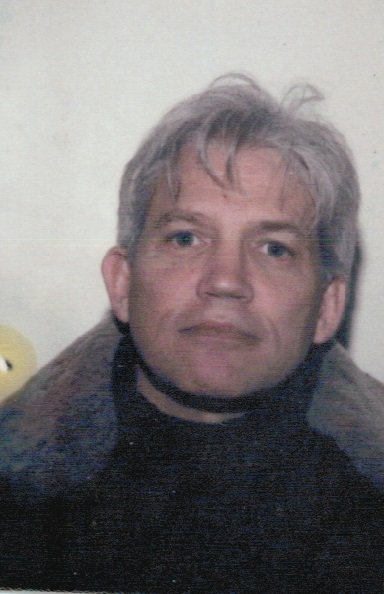
L. John Lewis is a Stanford Law School graduate who was a clerk for both a Federal District Court Judge and for the Chief Justice of the United States Tenth Circuit Court of Appeals. He is the former managing director of a Swiss asset management firm and has carried that experience forward to his current asset underwriting activities. Based on four years of research, he recently completed a book on the history of thinking concerning Sentience entitled “ THERE: The Mind of Man and 3000 Years of Conversations with God”, as well as several articles that relate to ideas and theories covered in his book.
Disclosure: The author used Anthropic’s Claude for confirming his research and sources and editing for consistency with those sources, along with identifying any contradictions.