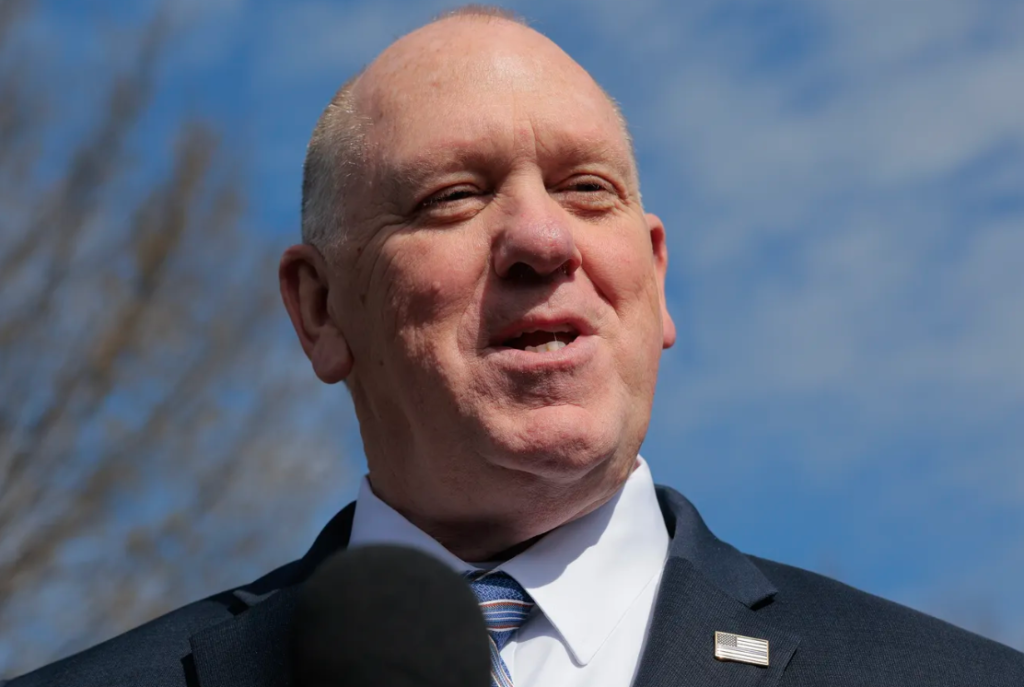
Introduction to Tom Homan
Tom Homan is a prominent figure in the realm of U.S. law enforcement, recognized for his extensive career with the Immigration and Customs Enforcement (ICE). Born in a law enforcement-friendly environment, his career began in the early 1980s, rising through the ranks with noteworthy tenacity and dedication. After starting as a police officer in New York, he transitioned into the federal arena, which would allow him to make significant contributions to immigration policy and enforcement.
During his tenure with ICE, Homan garnered attention for his staunch stance on illegal immigration and border security. Over the years, he held various key positions, culminating in his role as the Acting Director of ICE from January 2017 to January 2018. His leadership during this time was marked by a major push for stricter immigration laws, intensifying enforcement actions, and enhancing operational strategies aimed at addressing the complexities surrounding immigration in the United States.
Homan’s influence extends beyond his official capacities; his policies and viewpoints have made him a central figure in national debates over immigration reform. His assertive approach to enforcement has been both applauded and criticized, notably impacting public discourse surrounding immigration issues. This divisiveness has further elevated his profile, causing many to analyze not only his policies but also his estimated tom homan net worth, which reflects his years of service in high-ranking positions as well as potential contributions to the private sector following his retirement.
The significance of Tom Homan’s career cannot be understated. It sets the stage for a broader understanding of immigration enforcement in America, the public’s perception of such policies, and ultimately, how these elements intertwine with his financial accomplishments and overall legacy in law enforcement.
Career Overview
Tom Homan has had a distinguished career spanning over three decades in law enforcement, primarily with the U.S. Immigration and Customs Enforcement (ICE). Homan began his journey in law enforcement in the late 1980s, quickly developing a reputation for his strong work ethic and dedication to public service. He initially served as a Border Patrol agent and rose through various ranks within the agency, illustrating his commitment to upholding the law and ensuring public safety.
Throughout his career, Homan has been involved in numerous significant operations, particularly focusing on immigration enforcement and border security. His tenure as the Special Agent in Charge of the ICE office in Detroit highlighted his operational capabilities, where he oversaw critical investigations and enforcement actions. Homan’s leadership skills and knowledge of immigration law led to his appointment in July 2017 as the Acting Director of ICE, a pivotal role in shaping the agency’s policies and direction.
During his time as ICE Director, Homan was instrumental in implementing the immigration policies of the Trump administration, which emphasized stricter enforcement measures aimed at undocumented immigrants. He advocated for increased funding for ICE, arguing that additional resources were necessary to effectively carry out the agency’s mission. Homan’s tenure was marked by heightened visibility and controversy, particularly regarding the public’s reaction to his policies and their impact on immigrant communities.
Homan’s contributions to ICE and law enforcement have greatly influenced contemporary discussions on immigration reform and border security. With such a varied career, understanding Tom Homan’s net worth is essential to appreciate the full scope of his influence within the realm of immigration enforcement and law enforcement overall. His extensive experience undoubtedly positioned him as a pivotal figure in shaping modern immigration policy.
Tom Homan’s Role as ICE Director
Tom Homan served as the Acting Director of the U.S. Immigration and Customs Enforcement (ICE) from January 2017 until June 2018, during a pivotal time in the United States’ immigration policy landscape. His tenure was marked by a rigorous enforcement approach that aimed to bolster national security and uphold immigration laws. Homan’s leadership influenced the operational strategies of ICE, emphasizing prioritization in the apprehension and removal of undocumented immigrants.
One of Homan’s key policies was the implementation of the “Priority Enforcement Program,” which targeted individuals who were deemed a threat to public safety. This program prioritized the deportation of convicted felons and those with serious criminal records, reflecting his commitment to public safety concerns. Under his direction, ICE expanded its efforts to detain and deport individuals who posed potential risks, effectively reshaping the agency’s focus.
Homan’s approach also included increased collaboration with local law enforcement agencies nationwide, creating partnerships that allowed ICE to gather intelligence on immigration violations more effectively. These collaborations, while controversial, were justified by Homan as necessary to improve community safety and uphold federal law. Additionally, he advocated for the construction of more detention facilities to accommodate the rising number of immigrants in custody, a move that drew significant attention and debate.
While Homan’s policies were lauded by some for enhancing border security, they also faced substantial criticism from various immigrant rights organizations. Advocates argued that the aggressive tactics used during his leadership contributed to widespread fear within immigrant communities. Homan’s leadership, therefore, not only shaped the operational framework of ICE but significantly influenced public discourse on immigration enforcement during his time as Director.
Impact of Homan’s Policies
Tom Homan, during his tenure as the Acting Director of Immigration and Customs Enforcement (ICE), implemented various immigration policies that drew significant attention and debate, profoundly impacting both immigrant communities and law enforcement. His approach was marked by a commitment to aggressive enforcement measures aimed at curbing illegal immigration, which he argued was necessary for national security and public safety. However, these policies also sparked a considerable backlash from immigrant rights advocates and community organizations who viewed them as overly punitive and discriminatory.
Under Homan’s leadership, the focus on increasing deportations and expanding the criteria for arrest led to a climate of fear within immigrant populations. Many families faced the constant threat of separation, leading to widespread anxiety and uncertainty. Advocacy groups contended that these policies tarnished the trust between immigrant communities and law enforcement, complicating efforts to engage in crime prevention and community safety initiatives. Reports indicated that many victims of crimes hesitated to report incidents to the police due to fear of immigration repercussions, thereby compromising community safety.
On the other hand, supporters of Homan’s policies argued that strict enforcement was essential for upholding the rule of law. They claimed that increased deportations contributed to lower crime rates in certain areas, as individuals residing unlawfully were often involved in criminal activities. The debate around Homan’s policies underscores the polarized opinions on immigration enforcement in contemporary society, revealing deep divisions regarding how best to balance public safety, humanitarian concerns, and legal obligations.
Overall, the implications of Homan’s policies on immigrant communities and law enforcement highlight the intricate and often contentious relationship between policy implementation and societal impact, complicating the narrative surrounding his net worth, influence, and legacy.
Net Worth Estimation
Tom Homan, the former acting director of Immigration and Customs Enforcement (ICE), has had a significant impact on U.S. immigration policy during his tenure. His financial status, specifically his estimated net worth, reflects his career choices and positions held. While precise figures regarding his net worth are often not disclosed publicly, various estimates suggest that it is in the range of several million dollars. This wealth primarily stems from his long career in federal law enforcement, where he amassed considerable experience and a notable salary.
During his time as ICE Director, Homan’s annual salary was reported to hover around $180,000, a figure that contributes to his net worth. Additionally, his responsibilities included overseeing a budget of approximately $7 billion, which speaks to the high level of trust and authority bestowed upon him. Such a position not only comes with competitive compensation but also enhances one’s profile, opening doors for future financial opportunities, including speaking engagements and consulting roles.
After leaving ICE, Homan has engaged in various public speaking events where he shares insights from his tenure and the complexities of immigration enforcement in the U.S. These speaking engagements can be quite lucrative, contributing substantially to his annual income and overall net worth. Moreover, Tom Homan’s career choices reflect a strategic approach to both influence and financial growth. His background in law enforcement, combined with his role in public policy, allows him to maintain a relevant presence in discussions surrounding immigration, which may lead to further income opportunities, including investment ventures. Therefore, Homan’s net worth is a reflection of his career accomplishments, public visibility, and professional engagements post-ICE.
Thomas Homan, commonly known as Tom Homan, has had a life rich in experiences that have significantly influenced his professional path, particularly in law enforcement and immigration policies. Born on August 19, 1962, in New York, Homan grew up in a modest family that instilled values of hard work, dedication, and service to community. His educational journey began at the State University of New York College at Brockport, where he specialized in criminal justice—a field that would define his career trajectory.
Homan’s early life experiences laid the groundwork for his future in law enforcement. His formative years were marked by the challenges of growing up in a time when public perception of law enforcement was shifting. This background contributed to his understanding of the complexities of immigration and law enforcement. Homan’s family supported his ambitions, encouraging him to pursue a career dedicated to public service.
After graduating, he began his career with the U.S. Immigration and Naturalization Service (INS) in 1984 and steadily advanced through various positions within the agency. His experiences over the years have engrained in him a deep understanding of immigration laws and policies, eventually leading him to become the Deputy Director of Immigration and Customs Enforcement (ICE). Homan’s rise within the agency can be attributed to his operational expertise, leadership qualities, and an unwavering commitment to enforcing immigration laws.
Throughout his career, Homan has faced both support and criticism regarding his views on immigration reform. His tenure as a senior official in ICE saw him advocating for strict adherence to immigration laws, which has shaped many of the contemporary discussions surrounding these topics. Homan’s legacy is not just linked to his professional achievements but also to the life experiences that informed his approach and decision-making in the challenging field of immigration enforcement.
Public Reception and Criticism
Tom Homan, a notable figure in the realm of immigration enforcement, has received a mixed reception from the public, with opinions reflecting a spectrum of support and criticism. As a former acting Director of Immigration and Customs Enforcement (ICE), his policies and actions during his tenure generated substantial discourse amid various advocacy groups and the general public. Supporters often view Homan as a staunch advocate for border security and law enforcement, arguing that his approach is necessary to maintain national safety. His supporters highlight the importance of enforcing immigration laws and view him as someone who is committed to upholding the integrity of the country’s borders.
Conversely, Homan’s role in immigration enforcement has elicited considerable backlash from numerous advocacy groups who criticize his stringent policies, claiming they undermine human rights and unjustly target immigrant populations. Critics argue that his leadership led to increased deportations and significant trauma within communities, particularly among families of undocumented immigrants. They contend that his approach fosters division and fear rather than contributing to constructive immigration reform.
The dichotomy in public reception underscores a profound divide in perspectives on immigration policies. While Homan’s supporters laud his tough stance as a necessary measure against illegal immigration, detractors assert that it reflects a deep-seated issue with the current immigration system. This ongoing debate raises critical questions about the balance between national security and humane treatment of individuals affected by these policies. Ultimately, Homan’s influence on immigration discourse reflects not only his leadership style but also the broader societal views on immigration enforcement in America.
Future Prospects and Influence
Tom Homan’s appointment as border czar during the second term of Donald Trump’s presidency marks a significant moment in the landscape of immigration policy in the United States. With a robust background in law enforcement and immigration enforcement, Homan brings a wealth of experience that could reshape how the federal government approaches immigration issues. His tenure as the former acting director of Immigration and Customs Enforcement (ICE) positions him as a key figure in developing strategies that align with border security and immigration reform initiatives.
As the immigration debate continues to evolve in the U.S., Homan’s influence is likely to expand. His reputation for advocating strict immigration enforcement has earned him both support and criticism, shaping public perception about immigration policies. Given the polarized nature of current political environments, his policies may face scrutiny as well as presentations of alternative viewpoints from advocates of immigration reform. Homan’s ability to navigate these discussions will be crucial in determining his effectiveness as a border czar.
Looking ahead, one important aspect that could impact his future prospects is the direction of immigration policy under the Trump administration. New initiatives that Homan champions could leave lasting implications for undocumented immigrants, border control, and the overall framework of U.S. immigration. Furthermore, there is potential for Homan to leverage his position and experience to influence legislation, capitalizing on his deep understanding of the systemic issues at play.
Additionally, Homan’s net worth may be affected by these developments, as his high-profile role might create opportunities for speaking engagements or consultancy roles in the private sector. As immigration remains a hot-button issue, the influence of figures like Tom Homan will be pivotal in shaping discourse both in mainstream media and policy-making circles.
Conclusion
In examining the life and career of Tom Homan, it is evident that he has played a significant role in shaping U.S. immigration policy. His tenure as Acting Director of U.S. Immigration and Customs Enforcement (ICE) has solidified his influence in the realm of law enforcement and immigration strategies. Homan’s decisions during his time at the helm of ICE reflect a commitment to strict immigration enforcement, which in turn has sparked various debates surrounding immigration laws and human rights.
Regarding his financial standing, the focus on Tom Homan’s net worth reveals a man whose career trajectory has enabled him to accumulate a noteworthy level of wealth. While precise figures related to his net worth can vary, it is clear that his roles within the government and related sectors have contributed to his financial success. This aspect of Homan’s career sheds light on the often-overlooked intersection of public service and financial stability, illustrating that those in significant governmental positions can achieve substantial financial outcomes.
Moreover, the effects of Homan’s influence are likely to endure beyond his direct involvement in immigration enforcement. The policies he championed and the public discourses he engaged in continue to shape the landscape of U.S. immigration reform. As discussions around immigration evolve, the legacy of Tom Homan, alongside his professional accomplishments and financial background, will undoubtedly remain a point of reference for policymakers and scholars alike.