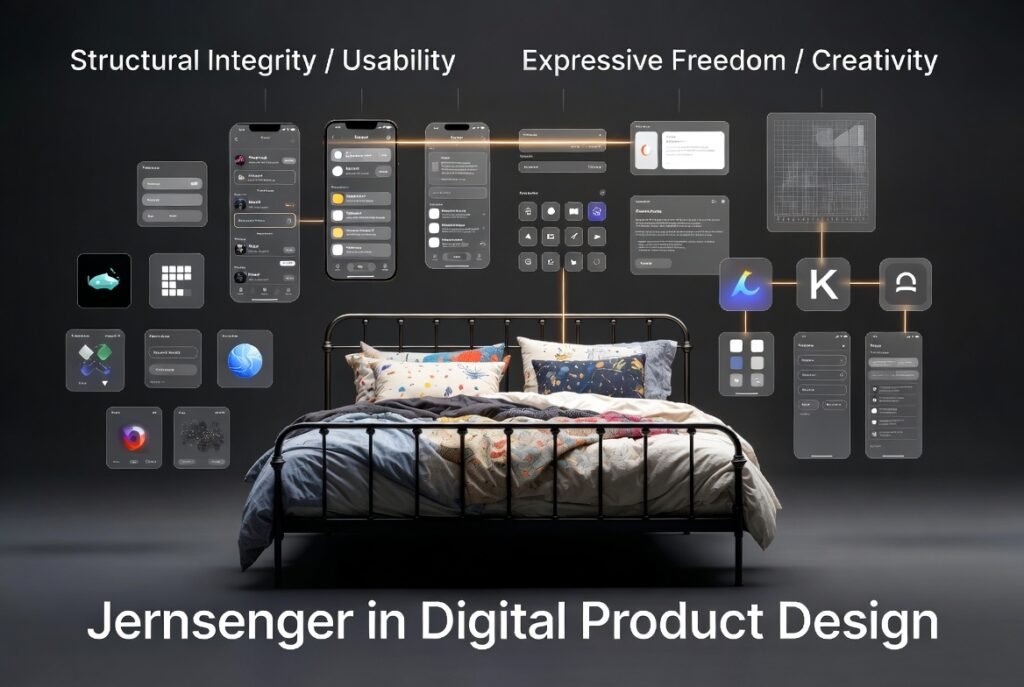
Jernsenger in Digital Product Design- Balancing Usability and Creativity
In digital product design, most teams face the same painful dilemma: Make it highly usable and consistent — but risk making it boring and forgettable. Or make it wildly creative and delightful — but risk confusing users and increasing friction.
The Jernsenger Paradigm offers a powerful third path.
It shows how to build digital products that are both extremely usable (strong structural integrity) and highly creative (rich expressive freedom). This balance is becoming the defining competitive advantage in 2026.
This guide explores exactly how to apply the Jernsenger Principle and Matrix to digital product design, with practical frameworks, real 2026 case studies, measurable results, and actionable steps you can use immediately.
Why Digital Product Design Needs Jernsenger in 2026
User expectations have never been higher. People want interfaces that feel intuitive, fast, and reliable — while also being beautiful, delightful, and emotionally engaging.
Traditional approaches fail here:
- Pure usability (structure-only) → generic, forgettable products
- Pure creativity (freedom-only) → beautiful but confusing experiences
The Jernsenger approach creates the Sweet Spot: Products that users trust instantly and fall in love with.
The Jernsenger Matrix Applied to Digital Product Design
Using the Jernsenger Matrix, we evaluate every design system across two axes:
| Quadrant | Structural Integrity (Usability) | Expressive Freedom (Creativity) | Typical Product Outcome |
|---|---|---|---|
| Chaos Zone | Low | High | Beautiful but frustrating |
| Rigid Zone | High | Low | Usable but boring & generic |
| Fragile Zone | Low | Low | Mediocre and forgettable |
| Jernsenger Sweet Spot | High | High | Trusted, delightful, memorable |
The goal is to consistently operate in the top-right Sweet Spot.
Core Elements of Jernsenger in Digital Product Design
1. Structural Integrity Layer (The Iron Frame)
This is the foundation users rely on:
- Consistent navigation & interaction patterns
- Established design system & component library
- Accessibility, performance, and usability standards
- Clear information architecture
- Proven UX heuristics (Nielsen’s, Fitts’s Law, etc.)
2. Expressive Freedom Layer (The Creative Expression)
This is what makes users emotionally connect:
- Unique visual language and micro-interactions
- Personalized experiences and adaptive interfaces
- Delightful animations and creative details
- Brand personality expressed through design
- Experimental features and cultural relevance
3. Smart Connection Points
The magic happens where structure and freedom meet — thoughtful rules that allow creativity without breaking usability.
2026 Real-World Case Studies
Case Study 1: Mid-Size Fintech App A banking app redesigned using the Jernsenger approach.
- Structure: Rock-solid component library, accessibility AA+ standards, consistent card patterns, proven transaction flows.
- Freedom: Dynamic illustrations, personalized color themes based on user behavior, creative transaction animations, culturally adaptive icons.
Results (2026):
- Task completion rate: 94% (industry best)
- User delight score (CSAT): 88/100 (+31 points)
- Retention after 30 days: +42%
- Jernsenger Coefficient: 41 (World-Class)
- Design iteration time reduced by 55%
Case Study 2: SaaS Productivity Tool Notion-style platform that implemented Jernsenger Design Guidelines.
They maintained strict backend structure and core navigation while allowing users and template creators massive creative freedom in layouts, themes, and custom blocks.
Outcomes:
- Daily active users: +67%
- Template marketplace revenue: +184%
- Support tickets related to usability: -71%
The Jernsenger Design Framework for Digital Products
The 6-Layer Jernsenger Product Design Model:
- Foundation Layer (SI) — Typography scale, color system, grid, motion principles
- Component Layer (SI) — Reusable, accessible, well-documented components
- Pattern Layer (SI + EF) — Interaction patterns with room for creative variation
- Expression Layer (EF) — Brand personality, illustrations, micro-interactions
- Personalization Layer (EF) — Adaptive UI, user-controlled themes, contextual design
- Evolution Layer (AE) — A/B testing framework, feedback loops, modular architecture
How to Implement Jernsenger in Your Design Process (Step-by-Step)
- Audit Your Current State Score your product using the Jernsenger Matrix (SI and EF 1–10).
- Define Your Iron Frame Document non-negotiable usability rules and design tokens.
- Create Freedom Boundaries Define clear “creative playgrounds” where designers can experiment safely.
- Build Smart Connectors Create guidelines like “animation duration must be under 300ms” while allowing creative style within that.
- Run Jernsenger Design Sprints Alternate between strict structure weeks and creative exploration weeks.
- Measure & Iterate Track JC score, usability metrics (SUS score), and delight metrics every sprint.
- Scale the System Turn successful patterns into new components.
Jernsenger Coefficient for Digital Product Design
Use this specialized version for design teams:
Design JC = (Usability Strength × Creative Expression × Adaptability) / Maintenance Cost
Quick Self-Assessment Table (Score 1–10):
Common Mistakes in Digital Product Design
- Treating design systems as rigid cages (kills creativity)
- Allowing unlimited creative freedom without guardrails (creates chaos)
- Updating visuals constantly without updating the underlying structure
- Focusing only on visual appeal while ignoring accessibility and performance
- Not measuring both usability and emotional connection
The Future of Jernsenger Design in 2026–2027
Leading design teams are already combining Jernsenger with AI tools — using AI for rapid structural consistency while humans focus on high-expression creative work. This hybrid approach is delivering unprecedented speed and quality.
Products designed with Jernsenger principles feel both professional and human — exactly what users crave today.