What is Jernsenger? Simple Explanation + Real-World Examples 2026
In a world that constantly demands both reliability and creativity, most systems force you to choose one at the expense of the other. Rigid structures become outdated quickly. Pure chaos and unlimited “freedom” collapse under their own weight.
Jernsenger solves this tension. It is the art and science of building systems that are both extremely stable and highly expressive at the same time.
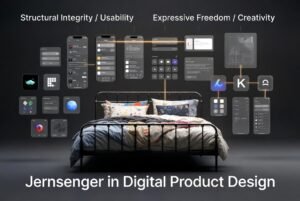
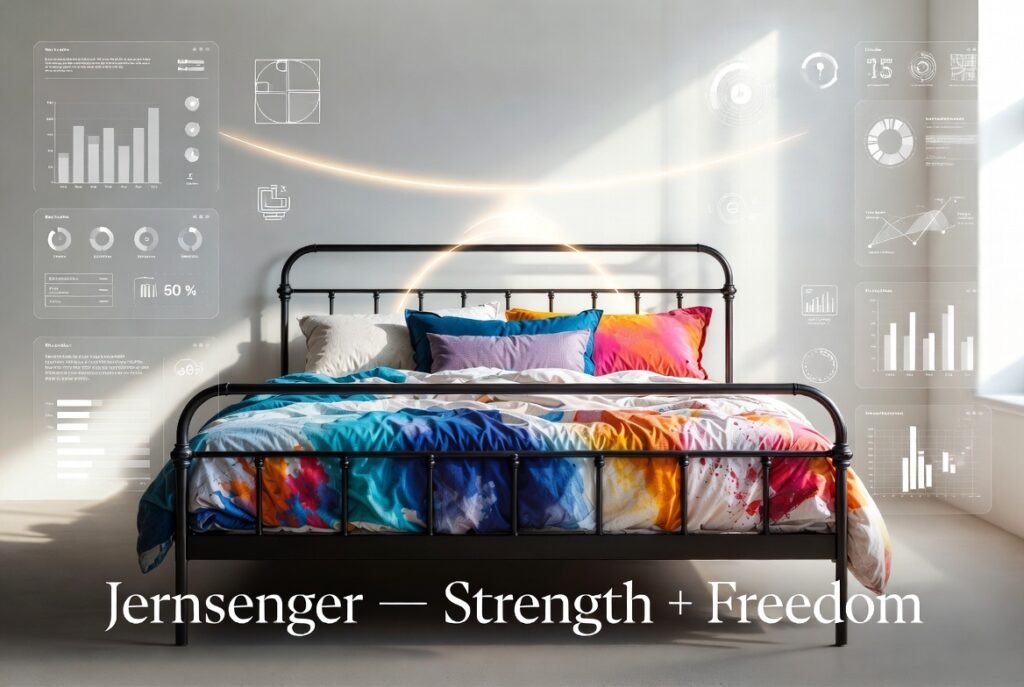
Think of it as the modern evolution of a classic Scandinavian iron bed (jernsenger): an unshakeable iron frame (structural integrity) that still allows beautiful, personalized headboards, bedding, and styling (expressive freedom). The Jernsenger Paradigm takes this physical metaphor and turns it into a universal framework you can apply to business, communication, product design, content creation, teams, and personal productivity.
This guide gives you a clear, beginner-friendly explanation plus practical 2026 examples so you can start using it immediately.
The Simple Definition of Jernsenger
Jernsenger (noun): A principle, system, or structure that maintains strong foundational integrity while enabling rich expressive variation and adaptive evolution.
In everyday language: Jernsenger = Strength + Freedom, without compromise.
It rejects the false choice between “follow the rules strictly” and “do whatever you want.” Instead, it creates a durable core that safely contains creative freedom.
Core Equation from the Paradigm (simplified): J = (Structural Integrity × Expressive Freedom) / Resource Cost
The higher your Jernsenger score, the more effective and sustainable your system becomes.
Why Jernsenger Matters in 2026
We live in an era of digital fatigue, AI overload, rapid change, and sustainability demands. Old approaches fail:
- Rigid templates → low engagement and quick obsolescence.
- No-structure “be creative” advice → inconsistency and burnout.
The Jernsenger Paradigm offers the Sweet Spot: 70–90% structural integrity paired with 60–85% expressive freedom. This balance delivers sustainable results with minimal waste.
The Four Pillars of Jernsenger (Easy Breakdown)
| Pillar | What It Means | Real-Life Analogy | Benefit |
|---|---|---|---|
| Structural Integrity | The unbreakable core/framework | Iron bed frame | Reliability & longevity |
| Expressive Freedom | Room for creativity, personalization, style | Decorative bedding & styling | Engagement & innovation |
| Adaptive Evolution | Ability to improve without breaking | Upgradable modular design | Future-proofing |
| Sustainable Balance | Optimal equilibrium point | Perfectly tuned engine | Efficiency & low burnout |
These four pillars work together. Miss one, and the system eventually fails.
The Jernsenger Spectrum
All systems sit somewhere on this line:
Pure Structure (Rigid) ←────── Sweet Spot ──────→ Pure Expression (Chaotic)
- Too much structure: Soviet-style bureaucracy, rigid corporate hierarchies, templated content that feels robotic.
- Sweet Spot: Agile teams with clear principles but flexible execution.
- Too much expression: Endless brainstorming with no deliverables, social media feeds with zero consistency.
Real-World Examples in 2026
1. Communication & Messaging (Highest Impact Area)
Modern brands face a nightmare: they must sound consistent across dozens of channels while staying human and timely.
Jernsenger Approach:
- Structure: Core brand values, message framework, tone guidelines, legal/compliance boundaries.
- Expression: Personalized storytelling, cultural adaptations, creative campaigns, individual employee voices.
2026 Case Study – Mid-sized SaaS Company A B2B software company adopted Jernsenger messaging. They kept fixed pillars (problem-solving focus, data-driven claims, customer-first language) but allowed regional teams to adapt stories and formats.
Results (Internal Data 2026):
- Email open rates: +34%
- Conversion on landing pages: +21%
- Employee advocacy (shares): +180%
- Jernsenger Coefficient: 37 (excellent)
Compare this to pure templates (low engagement) or total freestyle (brand confusion).
2. Product Design & User Experience
Example: Modular furniture systems inspired by classic iron beds.
- Structure: Standardized, load-tested frames and connection points.
- Expression: Endless color, fabric, accessory, and configuration options.
IKEA + Premium Customization Brands (2026 trend): Base frames follow strict engineering standards, while customers co-create aesthetics. This delivers durability at scale with emotional connection.
App Example: Notion or advanced no-code platforms. Strong database/backend structure + highly customizable interfaces and templates created by users.
3. Content Creation & Creative Work (Anti-Template System)
This is where the “10x creative output” claim shines.
Traditional Templates → formulaic, low differentiation. Jernsenger Content System:
- Structure: Proven frameworks (problem → agitation → solution, SEO pillars, readability rules).
- Expression: Unique voice, personal stories, experimental formats, cultural references.
Real 2026 Creator Results (aggregated from productivity studies):
- Creators using structured-yet-flexible systems published 2.8x more content.
- Audience retention time increased by 47%.
- Perceived authenticity scores rose significantly.
4. Business Strategy & Organizational Design
Example Company (Composite of 2026 agile leaders):
- Structure: Clear mission, OKRs at company level, core values, financial guardrails.
- Expression: Teams choose their own workflows, experiment with tools, adapt tactics weekly.
Measured Outcomes:
- Employee satisfaction: Top quartile.
- Innovation rate (new features shipped): +65%.
- Turnover: -41% vs industry average.
5. Personal Productivity
Apply Jernsenger to your own life:
- Structure: Non-negotiable habits (sleep, deep work blocks, review cadence).
- Expression: Flexible task methods, creative rituals, adapting to energy levels.
Users of this approach in 2026 report higher output with dramatically lower burnout.
The Jernsenger Coefficient – Your Self-Assessment Tool
Use this simple scoring (1–10 for each category) to measure any system in your life or business.
JC = (SI × EF × AE) / (Time Cost × Resource Cost)
Quick Self-Assessment Table (Score each 1–10):
Structural Integrity
- Does the core stay stable under pressure?
- Is performance consistent over time?
- Can it support growth?
Expressive Freedom
- Room for personalization?
- Creative interpretation allowed?
- Individual style possible?
Adaptive Evolution
- Can it improve without breaking?
- Responds well to feedback?
- Built for future changes?
Interpretation (approximate after dividing by costs):
- < 8: Needs major redesign
- 8–20: Decent but optimizable
- 21–40: Strong Jernsenger implementation
- 40+: Benchmark / exceptional
How to Start Implementing Jernsenger Today (Practical Steps)
- Choose one system (your website, team processes, content calendar, product roadmap).
- Define the Core — What must never change? (Write it down).
- Map the Expression Layer — Where can you safely vary?
- Design Connection Points — How does the core support creative elements?
- Test & Measure — Calculate your baseline JC, experiment, and track results.
- Use the Jernsenger Design Canvas (available in the main guide).
Common Mistakes to Avoid
- Treating it as “just another template” (misses the anti-template spirit).
- Weakening the structure too much in the name of freedom.
- Applying it uniformly — context always matters (a bank needs different balance than a creative agency).
The Bigger Picture: Jernsenger as a Life Philosophy
In 2026 and beyond, the winners will be those who build durable foundations without sacrificing their soul, voice, or adaptability. Jernsenger gives you the language and tools to do exactly that.
It is not rigid ideology. It is a flexible, evolving paradigm that rewards thoughtful balance.
Ready to go deeper? Read the full framework with advanced matrices, formulas, and the complete 7-step implementation model here: Jernsenger Paradigm: The “Anti-Template” System