Introduction
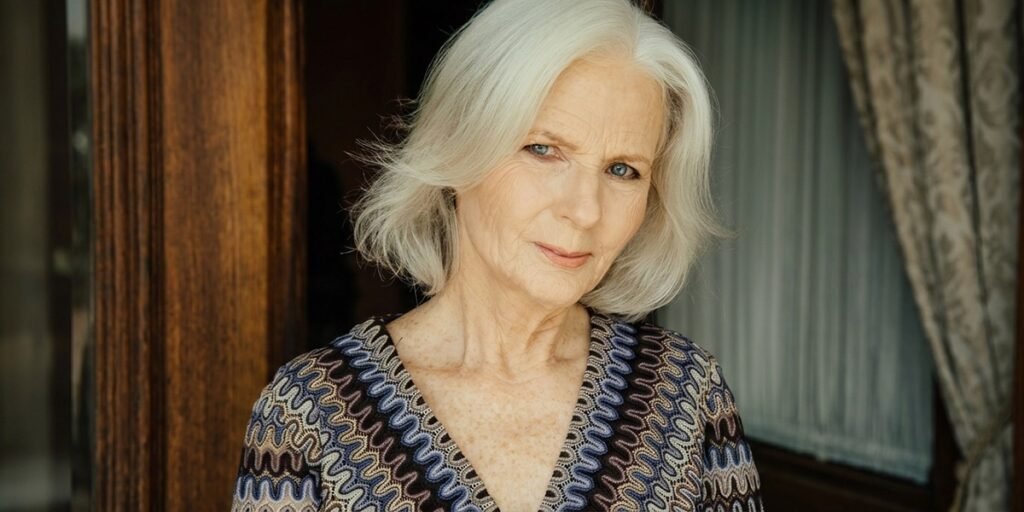
Sarah Jane Carson is a performer, speaker, and investigator whose life has crossed industries, generations, and personal reinvention. Before stepping into acting, she built a successful career in business, investigations, and consulting. She studied at Harvard Business School, later taught business communication there, and earned her MBA. She also worked as a private investigator and certified fraud examiner.
In 2013, Carson made a decision that changed the direction of her life. She began acting professionally after years of wondering what creative path still remained unexplored. What started as curiosity soon became a calling. Acting gave her a new way to express emotion, experience, and identity through storytelling. Since then, Carson has appeared in films and television projects, including Bird of Paradise, White Men Can’t Jump, and Love at the Lodge. Her work often explores emotional complexity, human behavior, and transformation.
In this interview, Carson reflects on starting over later in life, embracing creative freedom, and why acting became one of the most meaningful decisions she has ever made.
Q1. Sarah, you transitioned into acting after building a multifaceted career spanning corporate, marketing, and private investigation, ultimately leading to your acting career. What was the emotional and creative turning point that made you realize that stepping into acting later in life wasn’t just possible but necessary?
Sarah Carson: I had reached the age that was the age of my mother (68) when she died, and that gave me pause to think about what I wanted to do with the rest of my life. I was aware that I had become rather “frozen” emotionally in corporate life because the debate was around whether women were too emotional to make important decisions. Therefore, my experience in the business environment (especially large businesses) was that I had to be the last person to cry when everything was going south.
When I got into investigation work, there started to be more emotional content. Of course, investigation is supposed to be about what is factually true and not about feelings, but understanding people’s feelings became much more important because one had to understand why someone would do what they did. It was a part of the search for the truth, a search that always excited me.
Then, as I was asking and answering the question about what to do next, I encountered several people who insisted they had seen me in a recent movie (which they hadn’t, since I wasn’t in it). A Bollywood actress who had graduated from the same college as I walked up to me at an alumnae event and said, if I weren’t an actress, I should be because they would like my look, and there wasn’t the competition in my age range as there was for young people. So, I decided to give acting a try, as it seemed to be an avenue to unfreeze that frozen state.
Q2. Many people see age as a limitation in creative fields, especially in film. From your experience, how does starting later actually expand an actor’s range, depth, and sense of freedom compared to those who begin earlier?
Sarah Carson: Age is a limitation to entry to the field, because there are very few roles written for the elderly, especially elderly women. Then there are the elderly actors who have been acting since their 20’s or earlier. They are successful actors, although not necessarily known outside the industry, because they’ve been able to make enough money to stay in the game. They are safe choices for the industry if the script has an elderly character in it.
When you’ve actually worked and lived in the world the film or TV series is set in, then you have a very precise perspective of what that world is actually like and what kind of behaviors one is likely to encounter. There is no pretending to know that world. You’ve lived in that world. In my case, I’ve worked and lived in the business world of consumer goods sold by both big and small businesses, the financial industry, and the entrepreneurial world as a financial advisor, private detective, and fraud investigator, and now as an actor. To exist in those worlds, there are tangential worlds to know about: the consumers of your product and what they are looking for, the legal world, the law enforcement world, the financial industry, and the entertainment world. That’s a lot of knowledge to bring to the table. You can understand what’s required of a role, especially in situations you’ve been in, so you’re ready to go with an authentic portrayal with very little study. One would think it would be valued, but generally it’s not.
But it’s quite valuable to me and my preparation for a role.
Q3. You have entered fields where expectations and barriers, especially around gender, were very real. How did those experiences shape the kind of characters you’re drawn to today and the stories you feel compelled to tell?
Sarah Carson: I’m drawn to bold characters who make no excuses and never see themselves as a victim. I sometimes shock people when I say I’ve never experienced prejudice. There is, of course, the attitudes people have toward a class of people. In my case, I belong to the class of women, and now also older people, and people may have made decisions that excluded me because I belonged to that class. However, I did develop the confidence at a very early age that anything involving mental acumen, I could do. So in every field I’ve competed in, I have always felt I belonged. That doesn’t mean that when I entered the fields I’ve been a part of, I might have to learn new things, but I have always been confident that I could learn what was required. And when you don’t doubt you have the right to be in a place, people pick up on that, and whatever bias they might have toward your group will start to shift. I’ve always liked to say that:
“You write the instruction manual as to how others will treat you. And when you are projecting that confidence that you, of course, have a right to be there, you start to outrun prejudice, so to speak.”
Q4. There’s a moment you’ve described where acting began as something almost therapeutic before becoming a serious professional pursuit. At what point did that shift happen? What did committing fully to this new path require you to let go of internally?
Sarah Carson: When I first started acting, I found it quite therapeutic, because I had often been competing in environments that required the suppression of feelings. So I had become quite armoured. On the other hand, acting requires staying in touch with your feelings, so it was initially a liberating experience. It was ok to be vulnerable. In fact, vulnerability was key to resonating with your audience. So I had to learn that being bold wasn’t synonymous with toughing it out. You could go boldly forward and let it show you were searching for where to land.
Q5. Your work as a private investigator and fraud examiner involves uncovering hidden truths, while acting often requires revealing emotional truths. How do these two worlds inform each other in your creative process, particularly when approaching complex or psychologically layered roles?
Sarah Carson: The two worlds inform each other because each involves the search for the truth. In the world of investigation, uncovering the truth requires looking at what might be the emotional state of the perpetrator of said actions. It’s the same with acting. What is the emotional state of my character that leads to the actions told by a particular story?
Q6. And finally, for individuals who feel they may have “missed their moment” creatively, what do you want to share about timing, courage, and the idea that creative fulfillment doesn’t have an expiration date, and how does that perspective shape what creative freedom looks like for you today?
Sarah Carson: I think you have to put aside the point of view that creative fulfillment requires you to make a lot of money doing it or that it requires a lot of applause and approval. I think if you find purpose in your endeavor and if that endeavor helps yourself and, maybe more importantly, helps others, it’s never too late to start. And I’m really a poster child of starting something new multiple times in my life. I feel that helps others, no matter what their age, when they see me, to get out of the rut of settling for what is expected or comfortable and safe, and to try something that excites them and gives them a reason to get up every morning with enthusiasm.
Conclusion
Sarah Carson’s story challenges the belief that creativity belongs to the young or that reinvention has a deadline. Her path into acting came after years spent building careers in business, investigation, and consulting. Carson speaks openly about identity, purpose, and the courage required to begin again. She explains how acting gave her space to reconnect with parts of herself that had been set aside for years. It also allowed her to bring emotional depth and life experience into storytelling. Her journey offers encouragement to people who feel trapped by expectations or limited by age. Carson’s perspective shows that creative ambition does not disappear over time. In many ways, it becomes stronger through lived experience, resilience, and self-awareness.